In 1979, the U.S. made a huge mistake. It tilted its support away from the Shah of Iran to whom they thought was a moderate religious cleric, the Ayatollah Ruhollah Khomeini. Wow! We were wrong.
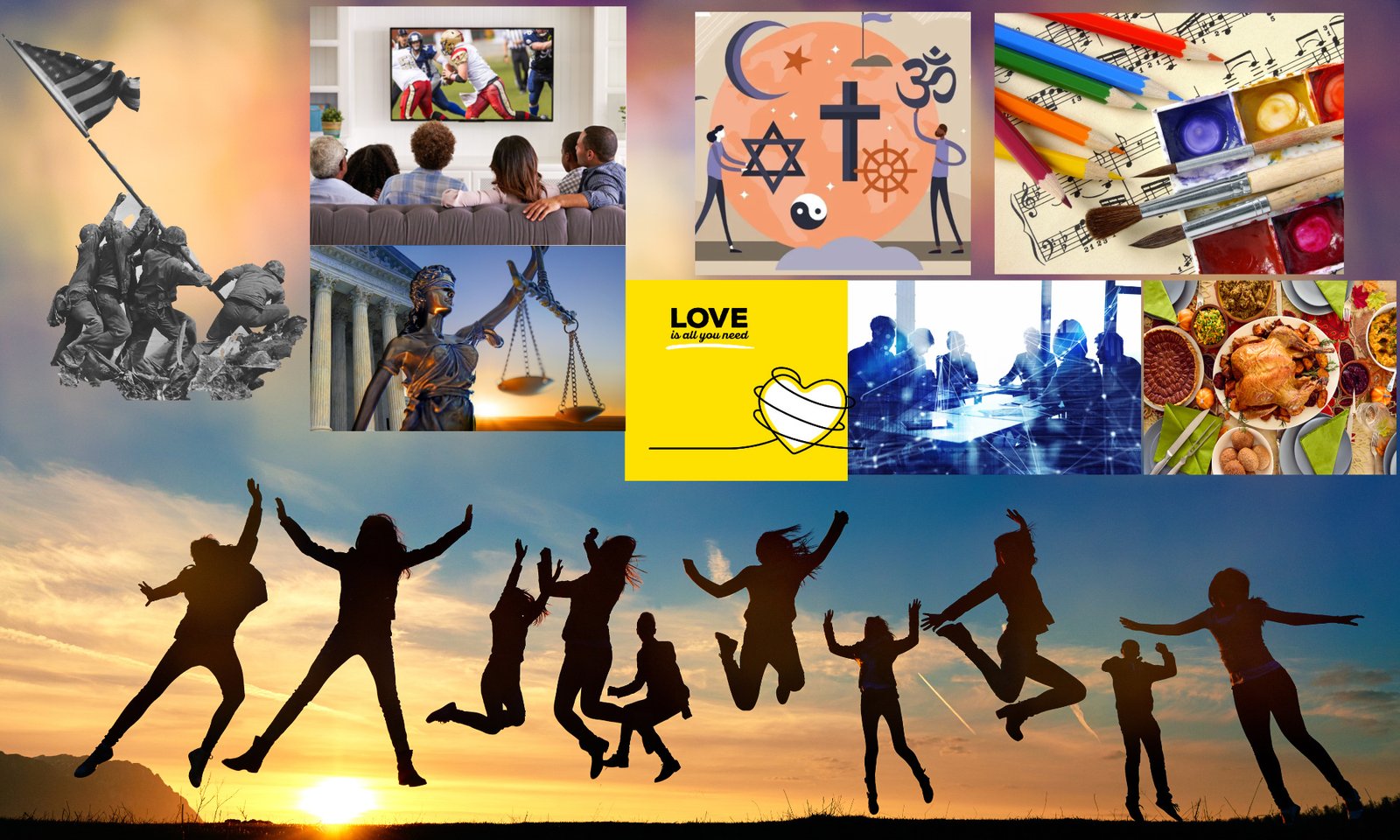
But instead of pointing fingers, it’s far more important to understand why. The fault was in what you might call our liberalism. Since our enormous industrial success that went a large way towards our winning World War II and also creating the wealthiest society the world had ever seen in the 1950s, the United States underwent a philosophical shift towards liberalism, which was in so many ways a good thing.
The simple truth is that humans have typically interpreted differences in a negative way, which was very much reflected in racist views associated with those differences. It would be a huge mistake to think that it was only manifested by those with white skin.
Different Asian societies have assumed their superiority over each other and over the Europeans whose ships started landing on their shores in the early 1500s and onwards. Even within the U.S. “melting pot,” different ethnic groups like the Irish, Italians, Jews, and White Anglo Saxon Protestants (WASPs) had biases against each other as well as against Blacks, Hispanics, and Asians. For that matter, blacks, Hispanics, and Asians had their own biases.
In the 1960s, this formal racism underwent a major change beginning with the Civil Rights Act of 1964 and the subsequent civil rights movement. While this obviously didn’t eliminate racism from people’s hearts, it made a huge impact on opportunities for minorities and in our intellectual thinking.
A liberal-oriented ethic that all people are equal entered the mainstream of thought, which merged well with our Constitution. In particular, this included the ethic that all religions are equal. This was especially true as our government adopted a formal secularism with court decisions clarifying the separation of church and state, such as Engel v. Vitale in 1962 and Lemon v. Kurtzman in 1971 (google them for more details).
Before trying to make this a Democrat vs. Republicans issue à la today’s polarization, it’s important to understand that this liberalism impacted both political parties. After September 11, 2001, for example, Republican President George Bush said that Islam was a religion of peace, despite the minor detail that a group of Muslims hijacked several airplanes and flew them into the two World Trade Center high rises and the Pentagon. A fourth plane was crashed by a counter-attack of passengers, so it never hit its target, which was presumably either Congress or the White House.
Is Islam A Religion of Peace?
If Islam were a religion of peace, why were those planes flown into those targets? Our answer was to separate religion from the Al Qaeda perpetrators, who were labeled terrorists and disconnected from Islam. The simple reality, however, is that they are part of several fundamentalist groups of Muslims who are still fighting a war against Christianity, Judaism, and the Western societies they have created.
Please let that sink in. While Christianity has long adopted the ethic that war is no longer justified to spread religion, the same is not true for several segments of Islam. It’s equally important to understand that it isn’t all of Islam. In fact, it’s almost certainly a minority of Muslims in the world today. Nevertheless, it is a well-funded minority because of oil money.
The point to this is that our liberalism — and Europe’s as well — has led to an influx of Muslim immigrants. While many were actually happy to leave repressive Islamic environments for the more liberal West, unfortunately the fundamentalist Muslims followed them and have taken control of the areas where they have settled. What’s their goal?
Here is a quote from a 1991 memo written by Mohammed Akram, a member of the Shura Council of the Muslim Brotherhood, which is the leading Sunni fundamentalist Muslim group. The memo was uncovered during an FBI investigation into terrorist groups:
“The process of settlement is a ‘Civilization-JihadistProcess’ with all the word means. The Ikhwan must understand that their work in America is a kind of grand Jihad in eliminating and destroying the Western civilization from within and ‘sabotaging’ its miserable house by their hands and the hands of the believers so that it is eliminated and God’s religion is made victorious over all other religions. Without this level of understanding, we are not up to this challenge and have not prepared ourselves for Jihad yet. It is a Muslim’s destiny to perform Jihad and work wherever he is and wherever he lands until the final hour comes, and there is no escape from that destiny except for those who chose to slack. But, would the slackers and the Mujahedeen be equal.”
That quote is just the tip of the iceberg when it comes to understanding the goals of fundamentalist Islam. What’s particularly important to understand, however, is that they’re a source of political violence that is totally against the grain of the equality movement that is sweeping the globe, however, imperfectly it is doing it.
The Worst of the Worst
The Iranian regime is the worst of the worst because they have control of a major oil country, which brings them billions of dollars to put together their plans of war against the West, with Israel being the primary target because it is so close. From the perspective of any independent analysis, the Iranian regime needs to be destroyed, and at whatever it costs to do it.
If today’s bombings ends with the regime still in power, they will only become worse in the future. While their present capabilities have been devastated, if they remain in power they will rebuild. In the interim, furthermore, they will take it out on their citizens far worse than before simply because they can’t take it out on anyone else, especially Israel.
So what’s the bottom line to all this. It’s that the U.S. and Israel are fighting a just war against the Iranian regime that is fighting an unjust one for religious reasons. The Iranian regime is fighting a religious war that goes against the very fabric of where history is heading on a global scale — towards a peaceful coexistence.
Strangely, however, our own internal politics have complicated the issue. First, our own struggles for power have led the Democratic Party to oppose Trump’s war. Second, there are forces now within the Democratic Party that actually support the Iranian regime, which is its own separate story.
Go back to the quote by Mohammed Akram. The Muslim Brotherhood has been implementing their strategy since the 1990s and are using our own liberalism against us. For one example, there is now a well-coordinated effort by fundamentalist Islam and extreme left wing sources to paint Israel as a colonialist power against the indigenous Palestinians, who aren’t even a historical group. Yet it has been amazingly successful on college campuses.
A second example is the growing success of Muslim politicians like Ilhan Omar and Zohar Mamdani, who openly support terrorist groups like Hamas. They are just the beginning of what the Muslim Brotherhood plans to become a much larger movement.
The War is Still Not Won
But back to the Iran War. The U.S. and Israel have won a crushing victory militarily, but that has so far not resulted in regime change. In fact, enough of Iran’s military still is entrenched to threaten the Gulf of Hormuz, so that oil is no longer shipping, which has cut something like 20% of the world’s daily oil supply.
It’s not clear, furthermore, whether this can be stopped so oil shipments can begin again or whether more bombing will result in the regime collapsing. Trump may be faced with the choice of sending in ground troops to finish the job. Will he complete the job or will he TACO and declare victory, even though the Iranian regime will remain in power?
Quite frankly, Trump is hard to read because he can be a complete model of inconsistency. What he says one day becomes something else the next. A week ago he wasn’t ruling out boots on the ground, while over the last couple days he was saying the war was almost over.
So what’s going to happen? All anyone can really say is stay tuned. Amidst substantial opposition from the Democrats and even some within his own party, it’s not clear that Trump will stay the course.